ENG-W vs AUS-W Dream11 Prediction, ICC Women’s T20 World Cup 2026 Final at Lord’s: Fantasy Tips Retrospective
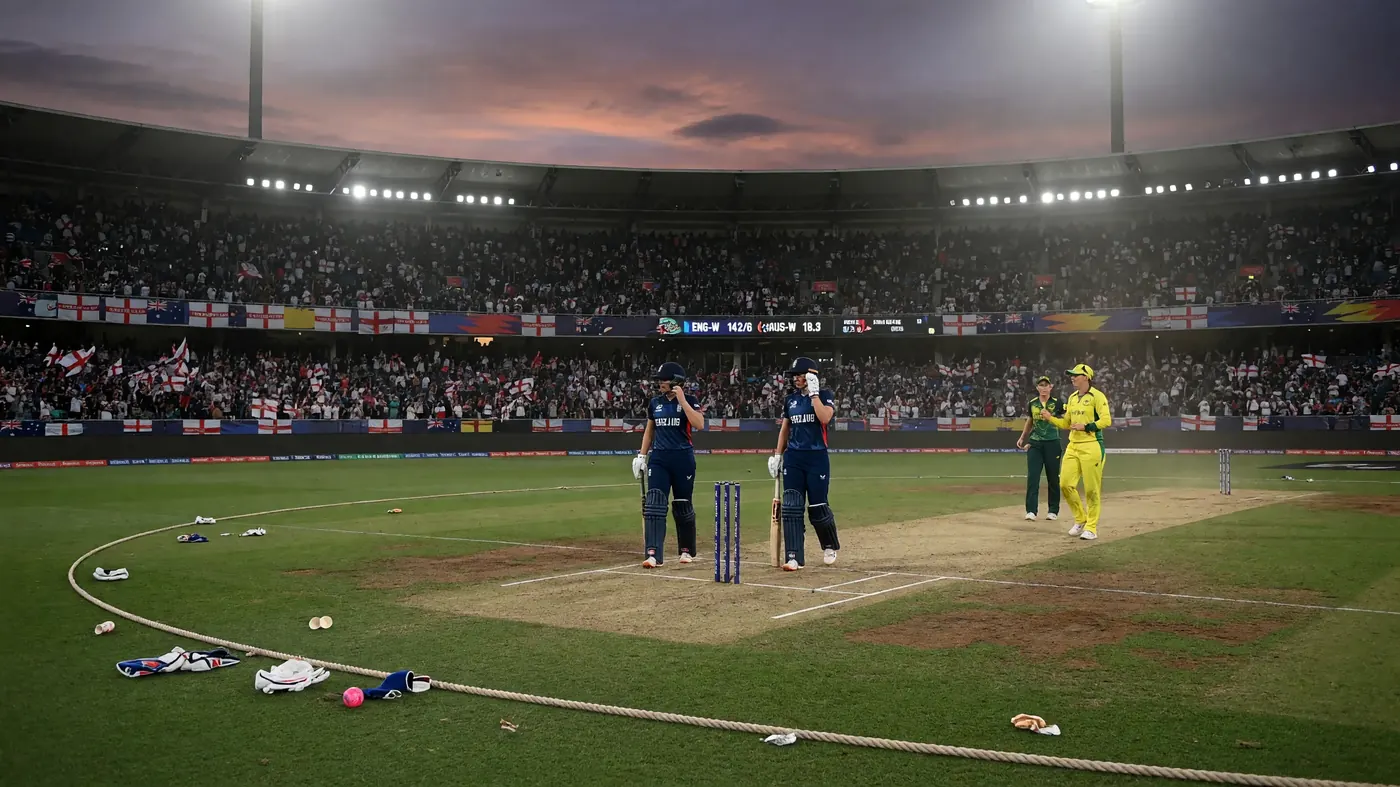
On Sunday, 5 July 2026, hosts England Women and Australia Women were set to contest the ICC Women’s T20 World Cup 2026 final at Lord’s Cricket Ground. Both sides arrived unbeaten. The Sunday Guardian’s pre-match Dream11 briefing — published the same day — laid out probable XIs, a Lord’s pitch read, a suggested fantasy core, and captain picks that fantasy desks still study as a clean example of final-day role selection.
- The final in context: unbeaten finalists at Lord’s
- How both sides reached the decider
- Probable XIs from the original briefing
- Lord’s pitch pattern and chase bias
- The suggested Dream11 core
- Captain and vice-captain framing
- Perry’s fitness note and late variables
- What the briefing still teaches fantasy players
- Frequently asked questions
The final in context: unbeaten finalists at Lord’s
The ICC Women’s T20 World Cup 2026 final was scheduled for Sunday, 5 July 2026 at Lord’s Cricket Ground, with hosts England Women facing Australia Women. Tournament finals compress every earlier selection decision into a single lock window, and this one carried extra weight because neither finalist had lost a match on the way through. Unbeaten pathways matter for fantasy construction: they usually mean settled batting orders, trusted bowling spells, and fewer speculative role swaps than a side that scraped through a semi-final on luck alone.
Lord’s as a final venue also shaped the conversation. The ground’s slope, the size of the square boundaries relative to the straight ones, and the way the new ball behaves under English summer light all feed into who holds value across a full T20. The Sunday Guardian briefing treated those venue signals as practical inputs rather than atmosphere. For Indian fantasy readers following women’s internationals on Golden11, the same discipline applies: venue pattern first, form second, reputation last.
The original preview was written as a same-day guide. That timing is important in retrospect. Probable XIs were the ceiling of certainty available before toss confirmation, captain multipliers were framed around season-long volume rather than a single warm-up knock, and fitness language around Ellyse Perry stayed cautious. Reading the piece a month later, the value is not in guessing a result that has already moved into history; it is in recovering the exact logic fantasy players were asked to use on the morning of the final.
How both sides reached the decider
Australia’s semi-final route was clean. The side beat West Indies by eight wickets, a margin that signals early control with the ball and a chase completed without a middle-order scramble. Eight-wicket wins tend to protect top-order strike rates and keep bowling figures tidy, which is why Australia’s openers and new-ball pair stayed central in published fantasy cores into the final.
England’s path was more dramatic. The hosts beat South Africa by 40 runs in their semi-final after a top-order collapse, with Nat Sciver-Brunt scoring 75 to rebuild the innings. A 40-run win after early wickets is a different kind of form signal from a cruise. It tells fantasy desks that the middle order can absorb pressure and still post a defendable total, and it elevates the captain who did the rebuilding — Sciver-Brunt — even when opener volume elsewhere looks louder on the leaderboard.
Both finalists entered the decider unbeaten in the tournament. That shared record reduced the usual “one side is peaking, the other is hanging on” split that often drives differential captain picks. Instead, the briefing’s tension sat inside roles: who opens, who bowls the powerplay, who finishes, and who still carries a fitness asterisk. Those are the questions a final-day squad should answer before any multiplier is locked.
Probable XIs from the original briefing
The probable England XI listed in the Sunday Guardian preview was Danni Wyatt-Hodge, Amy Jones, Nat Sciver-Brunt (captain), Alice Capsey, Heather Knight, Freya Kemp, Danielle Gibson, Sophie Ecclestone, Charlie Dean, Lauren Bell and Linsey Smith. That eleven balances a hard-hitting open with Sciver-Brunt’s middle-order engine, keeps Knight’s experience in the middle, and stacks spin through Ecclestone, Dean and Smith behind Bell’s new-ball pace.
The probable Australia XI read Beth Mooney, Georgia Voll, Phoebe Litchfield, Ellyse Perry, Ash Gardner, Georgia Wareham, Annabel Sutherland, Nicola Carey, Sophie Molineux (captain), Kim Garth and Lucy Hamilton. The top three is packed with left-right and tempo variety, Perry and Gardner supply all-round points paths, and the bowling group mixes Molineux’s spin control with Garth’s seam and Hamilton’s left-arm angle.
Two structural notes jump out when the XIs sit side by side. England’s list carries three specialist or near-specialist spin options plus Bell as the clear new-ball spearhead, which suits a Lord’s surface that can grip as the ball ages. Australia’s list spreads all-round overs across Perry, Gardner, Wareham, Sutherland, Carey and Molineux, which raises the floor for bowling points even if one seamer has an off day. Fantasy cores built from these lists therefore lean toward multi-skill names rather than pure bat or pure ball specialists who need a perfect match script.
Lord’s pitch pattern and chase bias
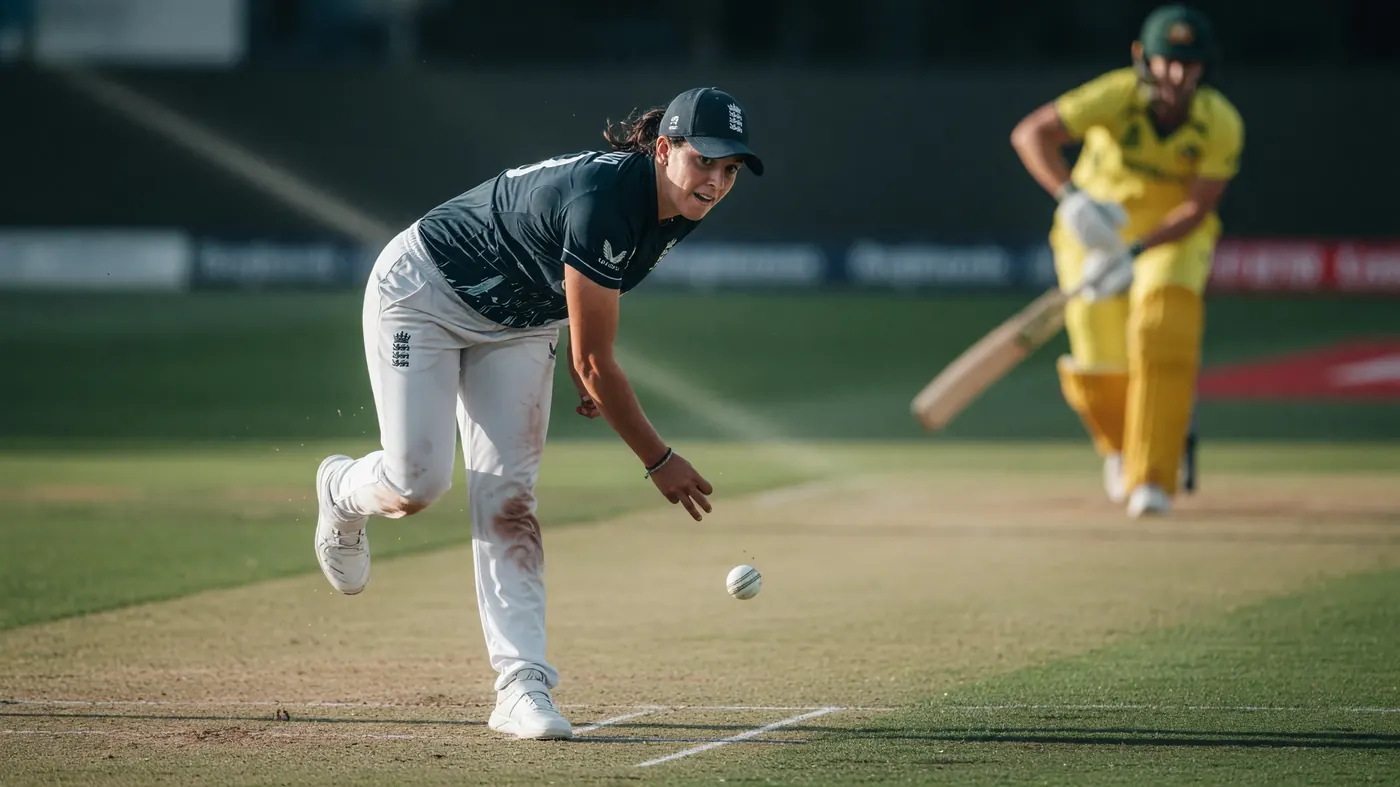
At Lord’s in the tournament, two of three matches had been won by the side batting second, and England were the only team to defend a total successfully there that year. Those two sentences from the original briefing are the entire pitch dossier a careful fantasy player needed. A 2-from-3 chase rate is not a guarantee that the final would also be won batting second, but it is a strong prior: dew, used ball, and the difficulty of defending under lights or late afternoon cloud can all push captains toward a chase preference when they win the toss.
England’s unique success defending at the venue mattered for the opposite reason. If the hosts trusted their bowling unit — Bell with the new ball, Ecclestone through the middle, Dean and Smith as control options — they had recent evidence that a total could still be protected at Lord’s. That evidence supported keeping English bowlers in the core rather than overweighting Australian chase batters alone.
For multiplier decisions, pitch pattern interacts with role. A chasing opener with a high floor becomes more attractive when the venue leans second-innings. A death bowler becomes slightly less attractive if totals compress and middle overs decide the game. The Sunday Guardian notes did not invent a mystery surface; they reported the simple tournament split and let readers map it onto their squads. That restraint is worth copying on any future women’s final at a ground with a thin sample size.
The suggested Dream11 core
The suggested Dream11 core in the original briefing included wicketkeeper Beth Mooney; batters Danni Wyatt-Hodge, Georgia Voll, Phoebe Litchfield and Nat Sciver-Brunt; all-rounders Ashleigh Gardner and Ellyse Perry; and bowlers Lauren Bell, Sophie Molineux, Sophie Ecclestone and Lucy Hamilton. Read as a structure rather than a name dump, the core is a 1-4-2-4 split with two Australian openers or high-order bats, England’s leading run-scorer, England’s semi-final rebuild captain, and a bowling mix that covers both attacks.
Mooney as the sole listed wicketkeeper is not a soft default. Her recent T20 World Cup final record included unbeaten knocks of 74 not out and 78 not out in Australia’s previous two final appearances. Finals are a tiny sample, but unbeaten half-centuries in consecutive deciders are the kind of role-plus-stage signal that survives even when league-phase averages look similar across keepers. Keeping Mooney locked also frees the remaining batter slots for pure volume names rather than a second keeper experiment.
Gardner and Perry as the all-round pair give the core two routes to bowling points plus middle-order batting. Bell and Hamilton supply pace variety from opposite sides; Ecclestone and Molineux supply the spin control both captains were likely to use through overs six to fifteen. The core is not a 7-4 England stack or a blind Australia stack. It is a cross-team construction that assumes the final stays competitive deep into the second innings — exactly the scenario an unbeaten-versus-unbeaten decider usually produces.
Captain and vice-captain framing
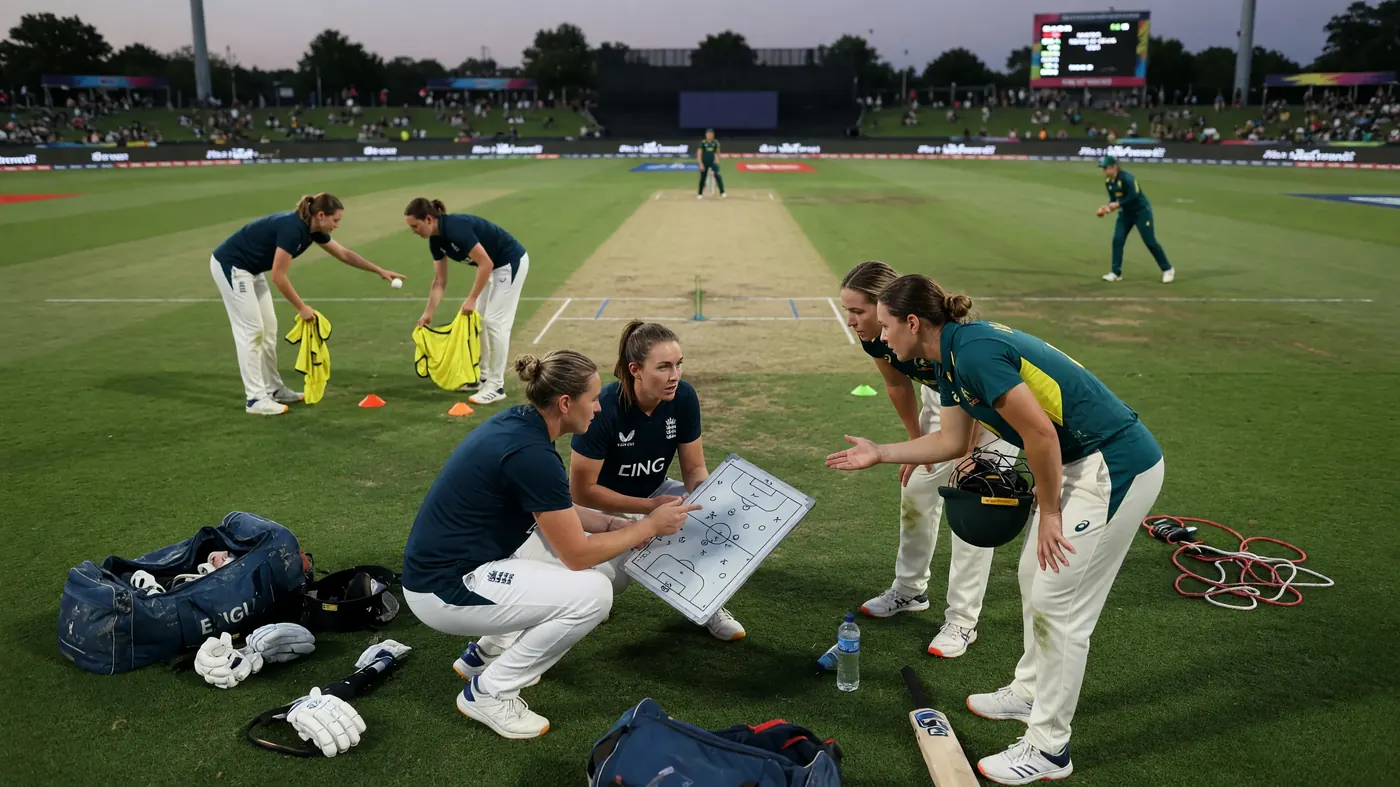
The original briefing’s primary captain pick was Danni Wyatt-Hodge and the vice-captain pick was Beth Mooney. Wyatt-Hodge was the tournament’s leading run-scorer with 294 runs at an average of 73.50 and a strike rate of 152.33. Those numbers combine floor and ceiling: a 73-plus average reduces the risk of a single-digit dud, while a 152 strike rate keeps the upside needed when the captain multiplier is active. The briefing still noted her 12 in the semi-final against South Africa, which is the honest counterweight — recent failure does not erase season volume, but it does argue against treating any opener as automatic.
Mooney as vice-captain is the stage-specific counterpick. Where Wyatt-Hodge’s case is tournament volume, Mooney’s case is finals conversion plus the wicketkeeping dual role. Unbeaten 74 and 78 in the previous two T20 World Cup finals are not ordinary warm-up scores; they are evidence that her game scales when the field spreads and the bowling plan tightens. Pairing an England volume captain with an Australia finals vice-captain also hedges the toss: one multiplier sits in each top order regardless of which side chases.
Secondary captain routes still existed inside the same core. Nat Sciver-Brunt’s 75 in the semi-final after a collapse is a classic “engine room” argument for users who distrust openers on a two-from-three chase ground. Gardner offers the bowling-plus-batting differential if users expect a lower-scoring scrap. The original briefing, though, kept the published headline simple: Wyatt-Hodge first, Mooney second. Simplicity is a feature on final day, when last-minute fitness noise can tempt users into low-information swaps.
Perry’s fitness note and late variables
Ellyse Perry was expected to play the final despite injury concerns and incomplete fitness. That single sentence from the briefing is a model of how fantasy desks should handle star all-rounders on the injury bubble. The expectation of selection kept her inside the core; the incomplete fitness kept her out of the captain shortlist. Users who promoted Perry to captain on reputation alone would have been fighting the source’s own risk language.
Other late variables sat outside the published text and therefore stay outside this retrospective. Toss winner, exact bowling order, and any last-hour XI tweak were not locked in the Sunday Guardian piece. The correct reading is to treat the probable XIs as the best pre-toss map available on 5 July 2026, then admit that any post-toss change would have required a fresh check against official team channels before lock. Golden11’s standing advice for finals is identical: confirmed role beats predicted role when the two diverge.
What the briefing did lock was enough structure to build from. Unbeaten finalists, a Lord’s chase lean with one successful English defence, a volume captain in Wyatt-Hodge, a finals-proven vice-captain in Mooney, and a cross-team core heavy on all-round overs. Those five pillars still form a useful checklist when women’s tournament finals return to major English grounds.
What the briefing still teaches fantasy players
A month after the final window, the Sunday Guardian preview remains useful less as a score predictor and more as a method document. It led with the fixture facts, stated how each side arrived, listed full probable XIs, reported the Lord’s win-split without dressing it up, named a concrete Dream11 core, and separated captain logic from mere fame. It also left Perry’s fitness as an open risk instead of inventing certainty. That combination is rarer than it should be in same-day fantasy copy.
For readers building women’s T20 squads on Golden11, three habits transfer cleanly. First, track tournament-long volume for captain floors the way Wyatt-Hodge’s 294 runs justified the armband even after a semi-final single-digit score. Second, respect stage-specific history when a player like Mooney has converted consecutive finals. Third, let venue splits — here, two of three Lord’s games won batting second — influence the balance between chase openers and defending bowlers without erasing the side that has already proven it can defend at the same ground.
The lasting comparison is with noisier finals previews that bury the XI, invent injury drama, or rotate captain names every paragraph. This briefing did none of that. It gave Indian fantasy players a stable map of ENG-W versus AUS-W on 5 July 2026 and trusted them to apply multipliers with discipline. That is the standard later tournament previews should still be measured against, and it is why the piece earns a place among Golden11’s dated fantasy tips archives rather than being discarded as expired matchday content.
Readers who want more captain math, contest construction notes, and women’s and men’s T20 role guides can continue through Golden11 fantasy tips, where similar explainers stay focused on verified roles, venue patterns, and responsible bankroll habits rather than last-second rumour.
Frequently asked questions about the ENG-W vs AUS-W final briefing
When was the ICC Women’s T20 World Cup 2026 final scheduled?
The final between hosts England Women and Australia Women was scheduled for Sunday, 5 July 2026 at Lord’s Cricket Ground.
How did England and Australia reach the final?
Australia reached the final by beating West Indies by eight wickets in the semi-final. England reached the final by beating South Africa by 40 runs, with Nat Sciver-Brunt scoring 75 after a top-order collapse. Both finalists entered the decider unbeaten in the tournament.
Who was the tournament’s leading run-scorer heading into the final?
Danni Wyatt-Hodge led the tournament with 294 runs at an average of 73.50 and a strike rate of 152.33, despite making only 12 in the semi-final against South Africa.
What captain and vice-captain picks did the original Sunday Guardian briefing favour?
The primary captain pick was Danni Wyatt-Hodge and the vice-captain pick was Beth Mooney.
How had Lord’s behaved in the tournament before the final?
At Lord’s in the tournament, two of three matches had been won by the side batting second, and England were the only team to defend a total successfully there that year.
Was Ellyse Perry expected to feature in the final?
Yes. Ellyse Perry was expected to play the final despite injury concerns and incomplete fitness, which kept her in the all-rounder conversation for fantasy teams.
What did Beth Mooney’s recent T20 World Cup final record look like?
Beth Mooney’s recent T20 World Cup final record included unbeaten knocks of 74 not out and 78 not out in Australia’s previous two final appearances.
Which players formed the suggested Dream11 core in the original briefing?
The suggested core included wicketkeeper Beth Mooney; batters Danni Wyatt-Hodge, Georgia Voll, Phoebe Litchfield and Nat Sciver-Brunt; all-rounders Ashleigh Gardner and Ellyse Perry; and bowlers Lauren Bell, Sophie Molineux, Sophie Ecclestone and Lucy Hamilton.