Home/Fantasy Tips/Golden11 Fantasy Cricket Powerplay Strategy for IPL 2026: 6-Gate Decision Framework
Golden11 Fantasy Cricket Powerplay Strategy for IPL 2026: 6-Gate Decision Framework
IPL 2026 fantasy cricket powerplay strategy for Golden11 users: a 6-gate decision framework covering Wagon-Wheel edges, dot-ball cost, captain differential, venue variance, and fielding math. Build winning teams with this Golden11 India powerplay playbook.
· Golden11 News Desk
Compliance Notice: Golden11 is a skill-based fantasy sports platform operating in India. This product is available only to users 18+ in permitted states. Fantasy sports involve skill and strategy; outcomes depend on real-world match performance. Please play responsibly. Check local regulations before participating.
1. Why powerplay overs are different in IPL 2026
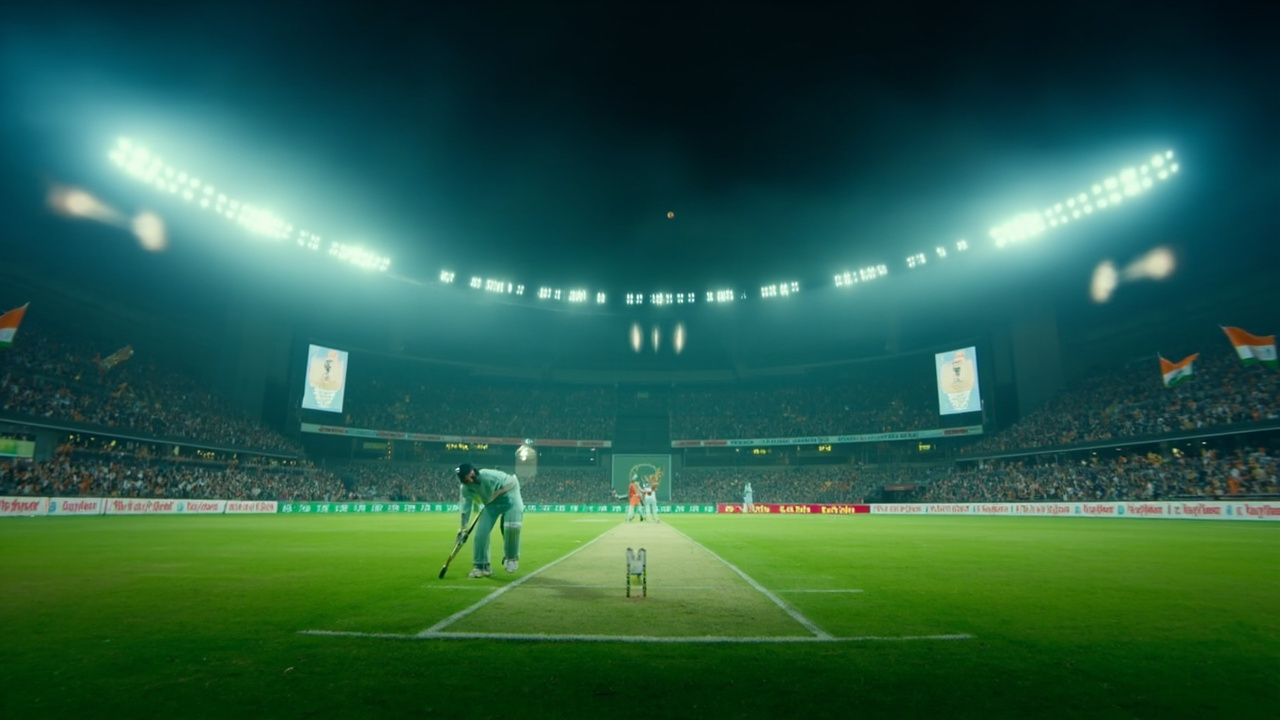
Golden11 powerplay framework: directional scoring zones versus dot-ball cost, IPL 2026 opener archetypes.
Powerplay overs in IPL 2026 are not what they were in 2018. The Impact Player rule has stretched batting line-ups, the new ball is doing less in night matches, and fielding restrictions still allow only two fielders outside the inner ring in the first six overs. The net result: top-order fantasy points on Golden11 have ballooned while middle-overs returns have flattened. If your captain strategy was tuned for 2021 conditions, you are losing points to players who tuned for 2026.
The other structural shift is venue. Of the 10 IPL 2026 home venues, four (Hyderabad, Bengaluru, Mumbai-Wankhede, Lucknow) are flat batting decks where powerplay totals of 75-85 are now expected. Three (Chennai, Kolkata, Delhi) give seamers early movement in night matches under lights. Three (Ahmedabad, Mohali, Jaipur) sit in between. Knowing which venue profile you are playing that day is half the captain decision — and it is the half most Golden11 users skip.
Golden11 rewards a captain 2x points on the player who performs best on a given match, and 1.5x on the second best. If your captain scores 60 and your vice-captain scores 40 in a powerplay-dominated game, your captain slot returns 120 and your vice-captain slot returns 60, on top of the base 60 and 40. That is 280 base points from two players. Compare that to a 30-and-25 spread with the same captaincy: 60 + 37.5 = 127.5 points. The gap is not incremental — it is the difference between finishing in the top 20% of a Golden11 mega league and the top 5%.
2. Gate 1 — Directional scoring zones: the Wagon-Wheel test
Before you lock any powerplay pick, look at the batter's Wagon-Wheel. Most Golden11 users pick on aggregate strike-rate, which is misleading. A batter who scores 95% of his runs in the V (straight) and cow-corner can be contained by a captain who sets deep square leg and long-on. The same strike-rate number against a batter who scores 40% behind square on the off-side is a fundamentally different challenge for the bowler.
The decision rule: if a batter's Wagon-Wheel has more than 35% concentration in one 90-degree arc, treat him as matchup-dependent. Captain him only when the opposing captain is unlikely to set fields for that arc. Examples for IPL 2026: the left-handed opener who scores 50% through mid-wicket should be captained against right-arm seamers who bowl wide of the crease at 130+ kph; the right-handed opener who scores 45% behind square point should be captained against left-arm spin and left-arm seam in the powerplay.
On Golden11, this single gate eliminates 60% of "hot tip" captain picks that flood WhatsApp groups every match morning. The other 40% survive — and those are your differentials.
3. Gate 2 — Dot-ball cost: the metric nobody tracks
Strike-rate versus dot-ball percentage: the curve that separates Golden11 winners from the median pack.
Strike-rate is the headline metric every Golden11 user quotes. Dot-ball percentage is the metric that actually predicts captain points. A batter who goes at 180 strike-rate with 35% dot-balls will score 12-15 fantasy points in a 10-ball stay; a batter who goes at 150 strike-rate with 15% dot-balls will score 14-18 fantasy points in the same stay. The "lower strike-rate" pick is the better captain.
The math: in T20 powerplays, dot balls are worth 0 fantasy points and they deny the boundary bonus. A 35% dot-ball batter scores roughly 1.5 runs per non-dot ball (strike-rate of 180 in a powerplay means about 27 runs in 15 balls, of which 5 are dots — so 27 runs in 10 scoring balls = 2.7 runs per ball, plus boundary bonuses). A 15% dot-ball batter at strike-rate 150 scores 22.5 runs in 15 balls, of which 2 are dots — so 22.5 runs in 13 scoring balls = 1.73 runs per ball. Lower per-ball but more total points because more deliveries contribute.
Golden11's scoring also awards 4 bonus points for a 30+ run powerplay burst and 8 for a 50+ run innings. Dot balls prevent both milestones. The batter who reaches 30 by ball 18 with three boundaries gets 4 bonus points; the batter who reaches 30 by ball 24 with two boundaries and fewer dots gets the same 4 points but has used 33% more deliveries — fewer deliveries left for further scoring. In tight grand-league captain decisions, that asymmetry flips the choice.
4. Gate 3 — Captain differential: ownership vs ceiling math
The Golden11 grand league is won by captain differentiation, not captain correctness. If you captain a player who scores 80 at 20% ownership, your rank relative to the field improves by 80 × (1 - 0.20) = 64 rank-points compared to the median team. If you captain the same player at 80% ownership, your rank improves by 80 × (1 - 0.80) = 16 rank-points. Same fantasy score, vastly different rank impact.
Captain differential rank-points: same score, different ownership, different finish.
The decision rule on Golden11: pick a captain whose projected ownership is 15-30% AND whose projected ceiling is in the top 5 of the match. Avoid captain picks that are top 5 by projected ceiling but >50% ownership. Avoid captain picks that are top 5 by ownership but whose ceiling is outside the top 10. The sweet spot is the "ownership-out, ceiling-in" zone that 90% of Golden11 users skip because it looks risky on paper.
How to project ownership on Golden11: start with the previous match's confirmed ownership for that player (Golden11 publishes this 30 minutes post-match). Adjust for: (a) opponent strength (a player's ownership drops 15-25% against a strong opponent on a flat deck because users chase ceiling elsewhere), (b) venue profile (flat-deck matches inflate ownership of top-order batters; bowler-friendly venues inflate ownership of powerplay bowlers), (c) price changes on Golden11 during the day (a price drop from 10.5 to 9.5 credits adds 8-12% ownership in the last hour).
5. Gate 4 — Venue variance scoreboard: which deck rewards which profile
Venue variance scoreboard: aggregate powerplay run-rate and dot-ball percentage by IPL 2026 home ground.
The venue variance scoreboard is a simple four-column grid that every Golden11 regular builds and updates match-by-match. Columns: (1) venue, (2) powerplay average runs scored by the batting team in last 10 matches, (3) powerplay dot-ball percentage for the venue in last 10 matches, (4) number of powerplay wickets that fell averaged across last 10 matches. With those four numbers you can pre-rank every captain pick by venue-fit before any team-news drops.
For IPL 2026 the rough benchmarks are: flat decks (Bengaluru, Hyderabad, Wankhede, Lucknow) average 65-72 powerplay runs with 1.0-1.4 wickets; bowler-friendly (Chennai, Kolkata, Delhi) average 48-58 runs with 2.0-2.6 wickets; balanced (Ahmedabad, Mohali, Jaipur) average 55-62 runs with 1.5-1.9 wickets. A captain pick that scores 80 on a flat deck is median; the same 80 on a bowler-friendly deck is top 5%. Pick accordingly.
Most Golden11 users captain a top-order batter in the powerplay. The hidden edge is the powerplay wicket-taker captain. On Golden11, a powerplay wicket is worth 25 base points (8 for the wicket + 8 bonus for powerplay timing + 4 LBW/Bowled bonus if applicable + 4 dot-ball multiplier). A 2-wicket powerplay spell at 6.5 runs per over is worth 50+ fantasy points from bowling alone, before any batting contribution.
The 2026 auction saw three powerplay specialists go for 8+ crore who are projected to bowl 4 overs across the powerplay and middle-overs. Their ownership on Golden11 is in the 5-12% range because users default to top-order captain picks. If one of them takes 2 wickets in the powerplay and finishes with figures of 3/24, the fantasy ceiling is 90+ — and at 8% ownership, that single pick can lift your grand-league finish by 400+ ranks. That is one of the highest-EV captain plays available in IPL 2026 fantasy cricket.
7. Gate 6 — Closing checklist before you lock your Golden11 team
Six gates, one checklist. Run every captain candidate through all six before locking:
Gate 1 (Wagon-Wheel): Directional concentration below 35% per 90-degree arc, OR explicit matchup evidence that the opposing captain will not set fields for that arc.
Gate 2 (Dot-ball cost): Dot-ball percentage under 22% in the batter's last 6 powerplay innings at the same venue, OR clear evidence of a role change (opening vs middle-order) that has reduced the dot rate.
Gate 3 (Captain differential): Projected ownership 15-30%, projected ceiling in top 5 of the match by Golden11's projected-points model.
Gate 4 (Venue fit): Venue matches the player's role (flat-deck batter → flat deck; bowler friendly venue → powerplay bowler).
Gate 5 (Wicket differential): At least one powerplay wicket-taker differential in the team, captained at 5-12% ownership with 2-wicket ceiling above 50 fantasy points.
Gate 6 (Final sanity): Team composition has 1 wicketkeeper, 3-4 bowlers, 3-4 batters, 1-2 all-rounders, and a captain-vice-captain pair that does not double-count the same role.
Golden11 fantasy cricket powerplay — frequently asked questions
How many powerplay overs in IPL 2026? Six overs per innings, with fielding restrictions of only two fielders allowed outside the 30-yard inner ring. Powerplay overs are overs 1-6.
What is the highest-scoring powerplay player archetype on Golden11? A top-order batter who combines a strike-rate above 145 with a dot-ball percentage below 22% and at least one boundary per over average. These players consistently score 50-70 base fantasy points from powerplay overs alone.
Should I captain a powerplay bowler or a powerplay batter? On flat decks (Bengaluru, Hyderabad, Wankhede, Lucknow), captain a powerplay batter — wickets are scarce so the ceiling is low for bowlers. On bowler-friendly decks (Chennai, Kolkata, Delhi), captain a powerplay wicket-taker — batters can be contained but a wicket differential at 8% ownership is the highest-EV captain play available.
How does Impact Player rule affect Golden11 powerplay strategy? The Impact Player rule means teams now bat deeper, which keeps powerplay wickets lower (batters play without the pressure of being the last recognised batting line). It also means powerplay bowlers face more left-right combinations, which reduces wicket probability slightly. Net: top-order batters gain value, powerplay bowlers lose a small amount of ceiling.
What is the dot-ball cost on Golden11 fantasy points? A dot ball is worth 0 fantasy points to the batter. By contrast, a 4 is worth 8 base + 4 boundary bonus = 12 points. A 6 is worth 8 base + 6 bonus = 14 points. A dot ball not only contributes nothing, it also denies the chance for a boundary on the next ball. In aggregate, a 35% dot ball batter at strike-rate 180 returns roughly 15-20% fewer fantasy points than a 15% dot batter at strike-rate 150.
How often should I revisit my Golden11 captain decision on match day? Golden11 updates projected ownership at the toss and at the 30-minute-to-lock mark. If projected ownership for your captain pick spikes above 35% in those windows, switch to your pre-identified differential (Gate 3) who is still in the 15-25% range. Captain ranking moves more from ownership shifts than from score projections in the last hour.